 Grünecho
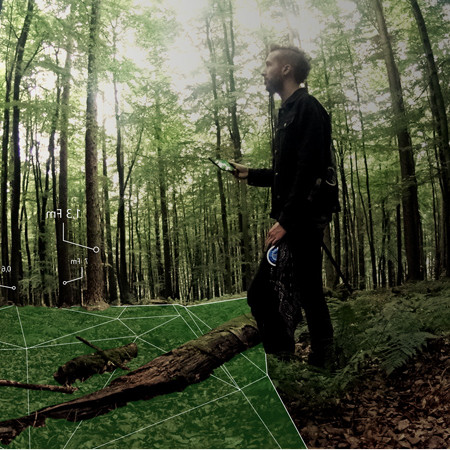
Every ICP Forests national focal centre collects the same kind of data: crown condition, soil condition, growth and the intensive monitoring on the Level II plots. And nearly every one of them digitises it from scratch – its own tender, its own budget, its own risk.
For Landesbetrieb Forst Brandenburg that chain is already built: from field data capture through data model and automation to public analysis. The source code is published on openCode, self-hosting is documented.
You do not have to start from zero.
Does this sound familiar?
- table_view Decades of measurements live in grown spreadsheet chains that exactly one person in the house understands.
- edit_note The survey season runs on paper, or in an application that stops working in the stand without a network.
- lock The results are scientifically valuable but only available internally – the public and research cannot reach them.
- assignment_late Reporting obligations towards ICP Forests, the federal level and the EU cost the same manual work every year.
- currency_exchange Tendering your own build for an application that already exists elsewhere is hard to justify.
What the platform covers
The WZE app for Android, Windows and Web: offline-capable, map with pre-cached tiles, external GNSS receivers over Bluetooth, azimuth and distance measurement, plausibility checks right on the plot.
Survey forms are generated from JSON schemas. When the survey key changes, the schema changes – no new release, no new work order.
A data model along ICP Forests conventions, plus a documented REST interface for analysis, specialist procedures and research – with access control you hold yourself.
Integration of the permanent monitoring sensors on the Level II plots and automated processing, instead of recurring manual work before every report.
Long-term analyses, climate and drought-stress evaluations in a public platform – the proof that your surveys arrive where they belong.
Self-hosting in your own data centre is documented. Where that is not desired, operations can be supported or taken over.
Why reuse instead of rebuild
The source code was produced with public funds and is published on openCode. Reuse is exactly what it is there for.
Data model, offline synchronisation, field-readiness and analysis logic are the effort that blows up a project like this. Your share is the adaptation, not the invention.
You take on the code, not a licence. If you end the collaboration, you keep a running, documented application.
The more organisations share the same base, the cheaper every further adaptation becomes – and the more comparable the results are across borders.
How an adoption works
A comparison of your survey keys, data holdings and IT constraints with what exists in Brandenburg. The result is an honest statement of how large the gap is.
Deliverable: A written assessment with an effort frame and a recommendation – also available as a standalone engagement.
Data model and survey schemas tailored to your surveys, roles and responsibilities mapped, legacy data migrated.
Deliverable: A running instance on a test system, filled with your historical data.
One survey season in real use with part of the field crews – in parallel with the existing procedure, so nothing is lost.
Deliverable: A proven procedure, trained field teams, documented follow-up work.
Full rollout, publication of the analyses, handover to your own staff or your service provider – with documentation, not with dependency.
Deliverable: An operational platform, public analysis, documented operations.
The time and cost frame comes out of phase 1 – any number before that would be a guess.
The reference
Since 2024 Grünecho has supported Forest Environmental Monitoring Brandenburg – from sensor data capture on the plot to the public platform. The application is in use, the analyses are public, the source code is published.
Visit the platformopen_in_new Source code on openCodeopen_in_new Project description
What the data says
This time series is loaded straight from the open interface of Forest Environmental Monitoring when you open this page — one request, aggregated server-side. That is what an open interface means here: not a report as a PDF, but a value any application can retrieve.
In percent, 0 = fully foliated. One value per survey year.
Loading the time series …
Values as a table
| Year | Mean defoliation | Trees assessed |
|---|
Data source: Landesbetrieb Forst Brandenburg, Forest Environmental Monitoring (crown condition survey, table cc_trc, all assessed trees). Retrieved through the platform's public interface.
Analyses on the platformopen_in_new Interface documentationopen_in_new
Would this fit your organisation?
A 30-minute call is enough to establish how far your surveys are from the ones in Brandenburg – and whether reuse is the right route for you at all.
Frequently asked questions
What does an adoption cost?
Honestly, only after the assessment. The cost drivers are known: how far your survey keys differ from the Brandenburg ones, what state your legacy data is in, whether you want to host it yourself, and how many field teams need training. What falls away is rebuilding the domain logic – and in projects like this that is the largest item.
Who owns the code afterwards?
The base is public on openCode. Whatever is added for you belongs to you – and can, if you wish, be published as well, so the next organisation benefits from it.
Does this have to go through a tender?
That is your procurement office's decision, not mine. What I can contribute is a solid statement of work and a documented rationale for why reusing existing code is the more economical route. Both are the basis on which your procurement office can decide.
Can it run in our own data centre?
Yes. Self-hosting is documented and the platform builds on open components. For organisations without their own operations capacity, running it can be supported or taken over.
We survey differently from Brandenburg. Does it still fit?
Probably yes, because the survey forms come from JSON schemas rather than hard-wired code. That is exactly why the assessment comes first: it answers this question with facts rather than a promise.
Who is behind this?
Gerrit Balindt – forest scientist (M.Sc.) and software engineer, research associate at the Thünen Institute of Forest Ecosystems and, since 2024, IT consultant to Landesbetrieb Forst Brandenburg. Someone who knows the survey keys and built the application.